

 About 18th Digitech
 Awards and Credentials
 Our Partners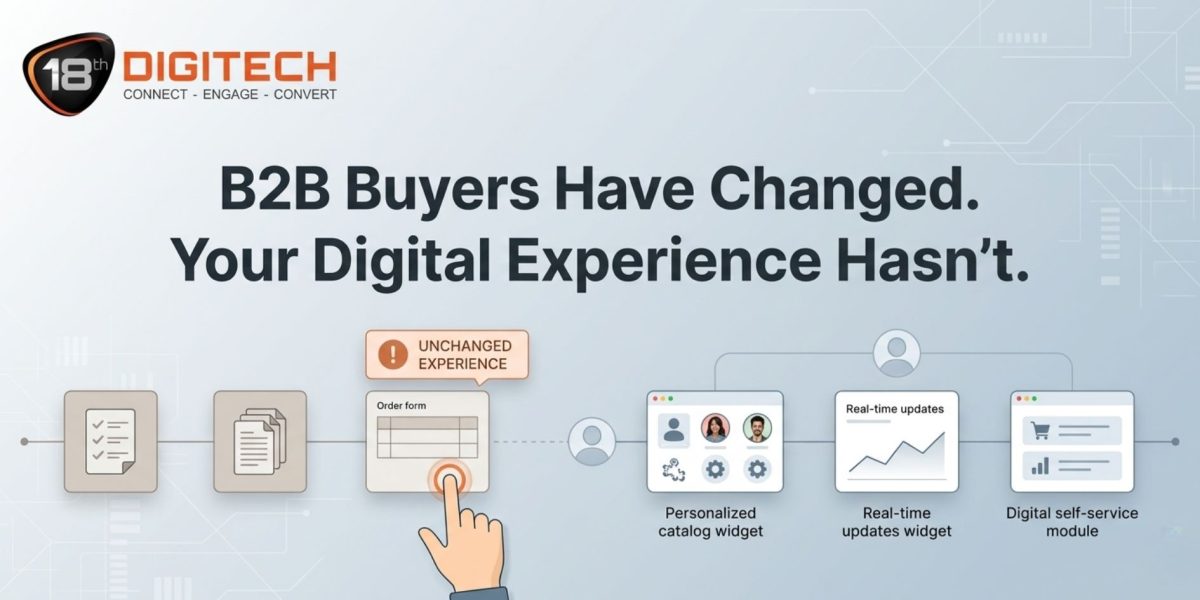
Your competitors aren’t stealing your deals. Your own portal is.
Not your pricing. Not your product. Not your sales team. The experience you built years ago and left untouched that’s what’s costing you. And because buyers don’t complain when they leave, you don’t see it happening.
70% of the B2B Buying Journey Is Over Before Sales Says Hello
Read that again
By the time a buyer reaches your sales team, the shortlist is nearly final. The opinion is already forming. The decision is closer to made than open. And all of that happened on your portal without a single conversation.
Most portals were not built to carry that weight. They were built to list products. That was fine once. It isn’t now.
Static Catalogues and Manual Quotes Are Killing Your Pipeline
Every time a buyer has to request a quote they wait.
And while they wait, they don’t sit idle. They open three other tabs. They browse a competitor’s portal. They compare. By the time your quote lands in their inbox, their mind is already leaning somewhere else.
A PDF catalogue does the same damage, quietly. It makes the buyer do the work. Browse this. Cross-reference that. Email us if you need pricing. That’s not a buying experience. That’s homework.
Today’s B2B buyer expects to log in, see their price, and place an order. No calls. No waiting. No back and forth. That expectation isn’t going away. And every portal that can’t meet it is losing deals it never even knew were in play.
Your Portal Is Working Right Now. The Question Is Whether It’s Working For You.
At 10pm, a procurement manager is building a vendor shortlist. Your sales team is offline. Your portal is not.
What that buyer finds in those few minutes shapes everything that follows. A portal that shows the right product, the right price, a clear path forward that portal is doing the work of your best salesperson. Quietly. Without a pitch deck. Without a follow-up sequence.
The B2B buyer journey doesn’t pause for business hours. Your digital experience shouldn’t either.
Showing Every Account the Same Page Is a Decision. Not a Default.
Most portals treat every buyer the same. Same catalogue. Same pricing. Same experience regardless of who’s logging in.
But one account has negotiated rates. Another works from an approved product list. A third has procurement teams across multiple locations, each with different access levels. These aren’t exceptions. This is how B2B buying works.
Account-level personalisation is where legacy portals quietly lose ground. Not on price. Not on product range. On the experience of actually buying. And buyers notice even when they don’t say so.
The Gap Between What Buyers Expect and What Portals Deliver — That’s Where Deals Die
Your buyers shop on Amazon at home. Fast. Clean. Personalised. One click and done.
They open your portal the next morning and hit a login issue, a static product list, a quote request form that goes to a shared inbox. They don’t file a complaint. They don’t schedule a call to give you feedback. They just quietly factor it into their decision.
This is where pipeline leaks. Not in negotiations. Not over pricing. In the ten seconds a buyer hits friction and recalibrates how much effort this relationship is going to take.
That gap between expectation and experience is silent. And it is expensive.
The Buyers Have Moved. Has Your Portal?
Walk through your portal today. Not as someone who manages it. As a buyer who doesn’t work at your company.
Look for account-specific pricing. Try to place a repeat order. See if the experience reflects the relationship you believe you have with that account.
If it doesn’t, your portal isn’t a sales asset. It’s a liability that looks like one.
B2B buyers have changed. The expectation is set. The gap is real.
The only question worth asking now is how long you can afford to leave it open.