



 About 18th Digitech
 Awards and Credentials
 Our Partners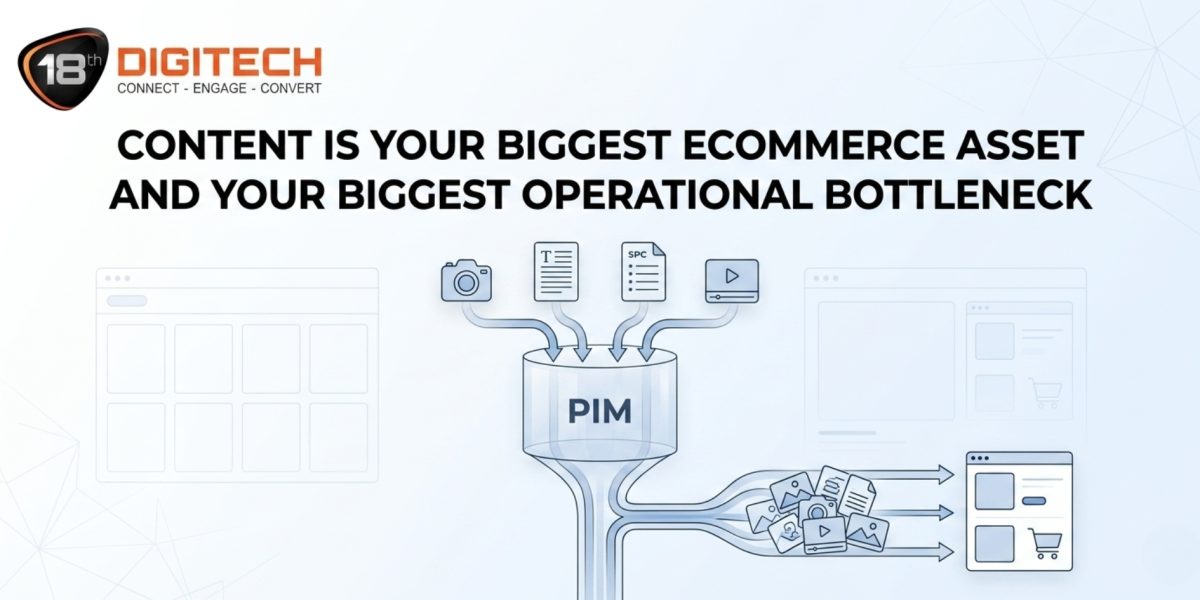
Somewhere on your website right now, there is a product that deserves to sell. Good product. Right price. Right audience. But the page it lives on is doing everything possible to talk the customer out of buying it. That is an eCommerce content operations problem. And it is costing you more than you think.
Great products lose sales every single day not because of competition but because of a product page that never got the attention it needed. Nobody noticed. Nobody fixed it. The product just quietly underperformed while everyone looked elsewhere for answers.
When Your Product Page Fails, Everything Else Fails With It
There is no sales team in eCommerce. No one to step in when the page is not doing its job.
The description, the headline, the images. That is the entire conversation between your brand and your buyer. If that conversation is flat or half finished, the customer closes the tab and finds someone else who made the effort.
Good product content management is not a creative exercise. It is the difference between a product that earns its place in your catalog and one that just takes up space.
Growth Breaks Things and Content Is the First to Go
Nobody plans to have bad content. It happens because growth moves faster than the systems built to support it.
When the catalog was small, every page got real attention. Then the business grew and that same small team was expected to handle product description at scale with the same care they once gave twenty products. That is where the content bottleneck in eCommerce begins.
One product gets a page that actually sells it. The next gets whatever someone managed between two other deadlines. Customers feel that unevenness even when they cannot name it.
More Channels Means More Ways for Content to Fall Apart
Every new place you sell feels like progress until you realise what it demands from your team.
Each platform has its own rules, format, and expectations. Most brands think about where they want to sell. Very few think about what it actually takes to produce content for every one of those places. That gap is where a multichannel content strategy either holds together or quietly falls apart.
Brand consistency online starts to crack. Not dramatically. Just enough that something feels slightly off to every new customer who finds you somewhere they did not expect.
The Page Nobody Remembered Is Doing the Most Damage
Two years ago someone wrote a product page in a hurry. It went live. It ranked. Everyone forgot it existed.
That page is still there. Still showing an old price, a discontinued variant, a headline from a campaign that ended long ago. Outdated content does not send an alert. It just quietly turns away buyers while nobody on the team knows it is happening.
Product page optimization is not a one time job. It is an ongoing responsibility that most brands have simply not built into their workflow yet.
The Brands Winning Are Not Working Harder
The brands getting this right are not smarter or bigger. They just removed the small annoying things that slow every piece of content down before it reaches a customer. A content workflow automation process where nothing gets stuck in someone’s inbox for a week. A clear content approval process so work does not fall between two departments and disappear.
Content velocity in eCommerce is not about speed for its own sake. It is about building something reliable enough that good content reaches the customer before the moment passes. When that exists, launches happen on time and the team stops firefighting.
The Real Fix Has Nothing to Do With Hiring More People
More people in a broken process just means more people experiencing the same frustration.
A PIM system for eCommerce gives your product information one clean home. A DAM for eCommerce brands means the right image is findable in seconds not an hour. SKU content quality stops being a guessing game when you actually have a system telling you what is missing, what is outdated, and what needs fixing before a customer finds it first.
AI content production in eCommerce has changed what small teams can produce. But it only adds value when the process around it is solid. Automate a broken foundation and you break things faster.
The Challenge
Pull up your lowest performing product page right now. Read every word. Look at every image. Ask yourself honestly if you would buy that product based on what is in front of you.
If the answer is no, you already know what needs to change. The only question is whether your eCommerce content operations are built to make that change before another round of customers leave without ever telling you why.